Average Bounce Rates in 2025
For online businesses, bounce rate is more than just a number — it’s a direct reflection of how well your website engages visitors. A high bounce rate often signals missed opportunities, while lowering it can mean more conversions and sales. In 2025, the average bounce rate across all industries is around 45%, down slightly from ~47% a few years ago. That still means nearly half of all visitors leave after viewing just one page.
What is a Bounce Rate?
A bounce rate measures the percentage of visitors who land on your website and leave without taking any further action — no clicks, no form fills, no exploring other pages. In simple terms, it shows how often people “bounce” after viewing just one page.
A high bounce rate can signal that visitors aren’t finding what they expected, while a lower bounce rate usually means your content is engaging enough to keep them exploring.
Bounce Rate by Device
There are three main device categories used to measure average bounce rates:
- Desktop
- Tablet
- Mobile
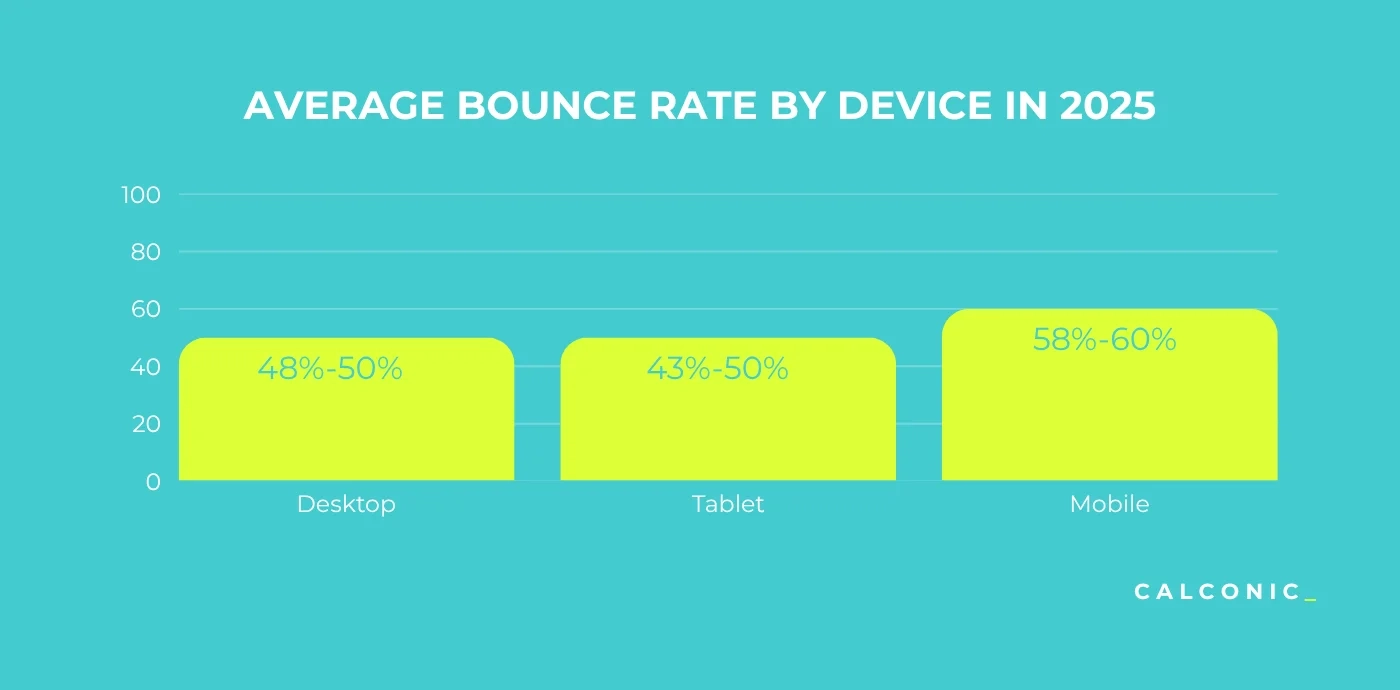
Desktops, including laptops, have long been the traditional way of browsing the internet. In 2025, they show an average bounce rate of around 48–50%. Tablets fall in the middle, with bounce rates averaging 43–50%, while mobile has become the most common way to access websites — and also the most volatile, with bounce rates reaching 58–60%.
When evaluating your website’s performance, it’s important to consider these device differences. Some industries, like e-commerce and travel, attract large numbers of mobile visitors, while B2B and professional services often see stronger engagement from desktop users. Understanding which devices your audience prefers helps you interpret bounce rates more accurately.
Bounce Rate by Industry
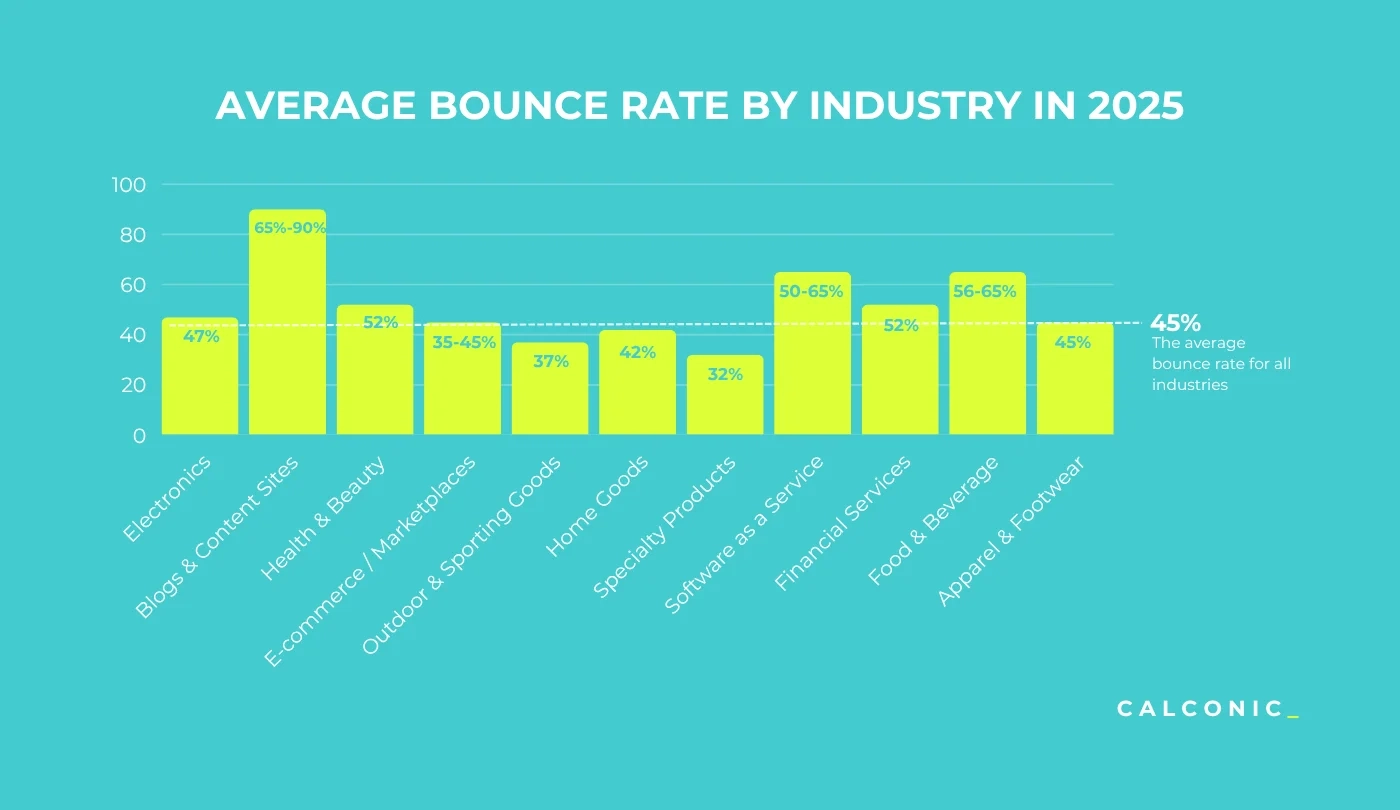
As you can see in the latest data, bounce rates in 2025 vary across industries but remain relatively consistent with only a few notable exceptions. The overall average is close to 45%, which means that if your bounce rate is below half, you’re in a good position.
Some industries perform better than others. For example, Specialty Products record the lowest bounce rates at around 32%, while Outdoor & Sporting Goods and Home Goods follow with averages of 37% and 42% respectively. Apparel & Footwear and Electronics sit closer to the overall benchmark, at 45% and 47%, supported by immersive product displays and detailed specifications that encourage browsing.
At the higher end, Health & Beauty and Financial Services average around 52%, while Food & Beverage websites range from 56% to 65%, often because visitors are looking for quick information like menus or opening hours. The highest bounce rates are still found on Blogs and Content Sites, at 65% to 90%, where users typically consume one article before leaving. Similarly, SaaS platforms see a wide range of 50% to 65%, reflecting how prospects compare features and pricing across multiple providers.
For your industry, the average bounce rate is a vital For your industry, the average bounce rate is an important benchmark for evaluating online success. By comparing your numbers with these industry ranges — and considering differences across devices — you can better understand where improvements are needed and what to expect from your visitors’ behavior. And remember: if your bounce rate is below the overall 45% average, you’re already ahead of the curve.